

What to Look for in a Cat Grooming Salon for a Nervous Cat

A nervous cat can turn a simple grooming appointment into a stressful day. The goal is not simply to finish the bath or brush-out. It is to find a salon that understands feline body language, works at the cat’s pace, and knows when to pause or stop.
That makes choosing a cat grooming salon different from choosing a routine pet service. Before booking, look beyond price and ask how the salon handles fear, noise, restraint, drying, coat problems, and communication.
Key Takeaways
Choose a cat grooming salon that can explain its approach to nervous cats in clear, specific terms.
Look for low-stress handling, a secure environment, and a plan for reducing contact with barking dogs or busy foot traffic.
Ask how the groomer responds when a cat freezes, hides, hisses, swats, or tries to escape.
Make sure the salon has a clear stop policy and will refer medical-looking skin, ear, or coat problems to a veterinarian.
Do not give a cat calming medication before grooming unless a veterinarian has prescribed or recommended it for that cat.
What to Look for in a Cat Grooming Salon for a Nervous Cat
Look for Cat-Specific Handling Experience
Cats do not always show fear in obvious ways. A cat may freeze, flatten its ears, widen its pupils, crouch, hide, or try to escape. The AAFP and ISFM cat-friendly interaction guidelines emphasize reading a cat’s emotional state and adapting handling to the individual.
When you call a cat grooming salon, ask what the team does when stress starts. A good answer should include steps such as slowing down, reducing restraint, pausing, changing the order of the groom, or stopping if safety becomes a concern.
Be cautious if the only answer is that the cat will be held more tightly until the service is finished. Nervous cats often need less pressure and more predictability.
Ask how the salon handles cats that dislike certain body areas
Ask the salon how they handle cats that dislike being touched around specific body areas, such as the paws, belly, tail, or face. A good groomer should explain how they adjust their handling and grooming approach for those sensitive spots.
Pay Attention to the Grooming Environment
A busy salon can feel very different to a cat than it does to a dog. Unfamiliar smells, barking, dryers, metal equipment, and people moving in and out can add to stress before grooming even starts. It has been noted that cats can be stressed by unfamiliar handling, loud noises, and a lack of control over a situation.
Ask whether cats are scheduled during quieter periods, whether they wait away from barking dogs, and how carriers are kept secure. The cat grooming salon should also reduce escape risk around doors and bathing areas.
Ask What Happens Before the Bath or Brush-Out
A careful groom should start with an intake and coat check. The groomer may ask about age, medical conditions, medications, past grooming, skin sensitivity, mats, and recent behavior changes. Pain or irritation can make handling much harder for a cat.
Make sure that they check the coat and skin before brushing and note that bald patches, wounds, unusual bumps, or signs of parasites deserve attention. A groomer is not there to diagnose disease, but should notice when something falls outside routine grooming.
Find out what is included and what is not.
Ask what the grooming service actually includes before booking. Some salons may include brushing, nail trimming, sanitary trimming, bathing, drying, and basic cat ear cleaning, while others charge separately for certain services. It is also worth asking what the groomer will not do, especially if the cat has severe mats, irritated skin, or other issues that may need veterinary attention. Ear cleaning, when included, should generally be limited to gentle cleaning of visible outer-ear debris.
Make Sure Bathing and Drying Are Cat-Appropriate
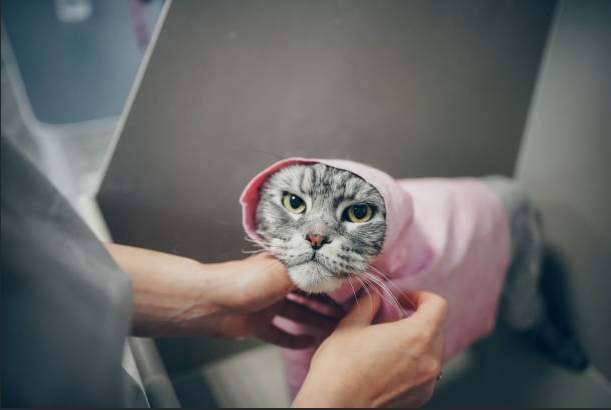
Most cats are good self-groomers and do not need frequent baths. When a bath is appropriate, the experience should still be designed for a cat. It is recommended to use lukewarm water and shampoo made for cats, avoid direct spray into the eyes, ears, and nose, rinse thoroughly, and towel-dry in a warm area. A dryer should only be used if the cat tolerates the noise and airflow.
If a business advertises a cat washing service, ask exactly how the cat is washed and dried. The word “cat” on a service menu does not automatically mean the process is feline-friendly.
Choose Cat Expertise Over a Long Service Menu
A pet care company may offer dog walking services, a pet waste service, and grooming in one place. That can be convenient, but a cat grooming salon still needs feline-specific experience with nervous cats.
Ask how often the groomer works with cats, what they do differently for anxious cats, and whether they keep notes about what your cat tolerated well. Those details can make later visits more predictable.
Look for a Clear Stop and Referral Policy
Sometimes the kindest appointment is an unfinished appointment. If a cat becomes increasingly frightened, risks injury, or shows signs of pain, the groomer should be willing to stop.
The same applies to medical concerns. A groomer may notice a sore, bald patch, severe matting, ear discharge, fleas, or tenderness. They should tell the owner and recommend veterinary care when appropriate rather than trying to diagnose the problem.
Ask How Long Your Cat Will Be at the Salon
For a nervous cat, the grooming itself may not be the only stressful part. Long waits in a carrier or holding area can also make anxiety build before the appointment begins.
Ask whether the salon gives cats a specific appointment time, how soon grooming starts after drop-off, and when owners are contacted for pickup. A shorter, more predictable visit can be easier for cats that become unsettled in unfamiliar places. It is also worth asking whether cats are kept in carriers or cages between grooming steps and how long those waiting periods usually last.
Conclusion
A nervous cat does not need to become fearless before grooming can go well. What matters is finding people who notice the early signs of discomfort and respect them. A thoughtful cat grooming salon can turn grooming from a battle into a slower, safer routine that your cat learns to handle more comfortably over time.
If your cat needs extra care around grooming, contact C&C Pet Care to ask about available grooming options and how the team supports pets with different comfort levels.
FAQs
Should I tell the groomer if my cat has bitten or scratched before?
Yes. Share any history of biting, scratching, panic, escape attempts, or sensitivity to certain body areas. This helps the groomer plan handling and decide whether the appointment can be completed safely.
Can a groomer give my cat a sedative?
Medication decisions belong with a veterinarian. Do not give a human medication, leftover prescription, or over-the-counter calming drug before grooming unless your veterinarian has specifically advised it for your cat.
Is a shorter grooming appointment always better for a nervous cat?
Not necessarily. Some cats do better with a short visit, while others benefit from a slower pace with pauses. The better question is whether the groomer can adjust the session to your cat’s behavior instead of forcing a fixed timeline.


Comments